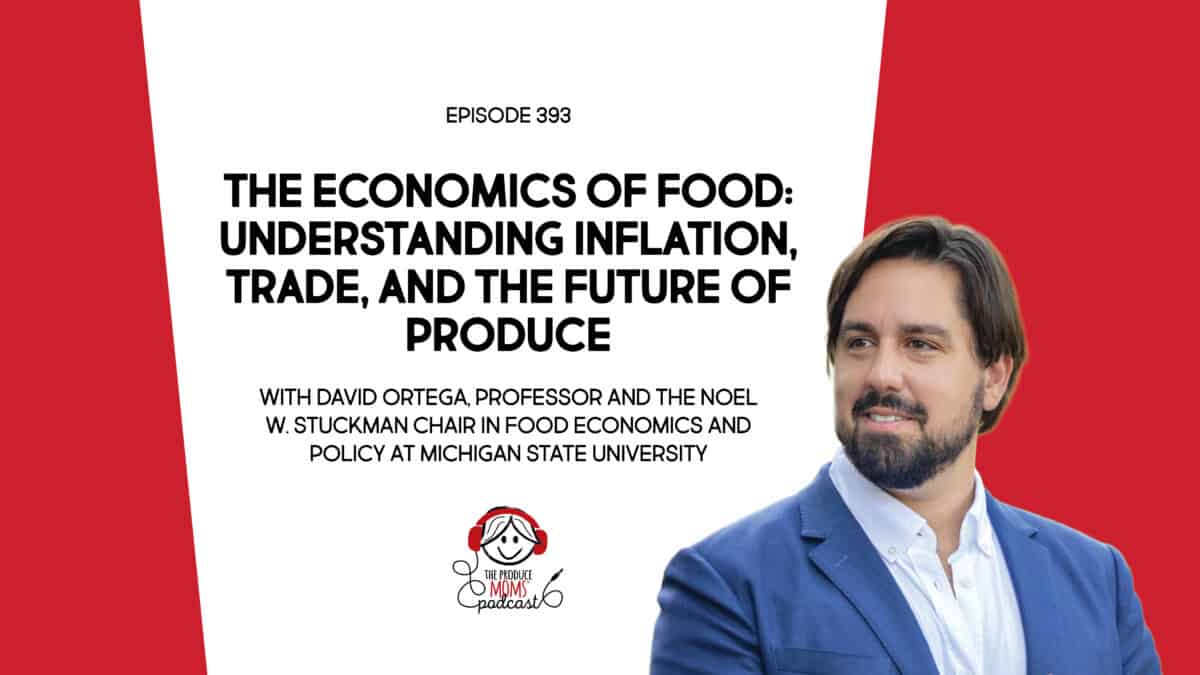
Episode 393: David Ortega

May 13, 2026
This post may contain affiliate links. Please read our disclosure policy.
Summary:
In this episode, Lori Taylor welcomes David Ortega, a leading food economist and professor at Michigan State University. As the first food economist featured on the podcast, David breaks down the complex forces shaping food prices today from inflation and global conflicts to supply chain disruptions and trade policy. Together, Lori and David explore what’s really driving higher grocery bills, how consumers are adapting, and what the future may hold for the fresh produce industry.
Key Takeaways:
- Food inflation reflects how quickly prices are increasing, not necessarily that prices are going down when inflation slows.
- Grocery prices today are significantly higher than pre-pandemic levels due to cumulative inflation over several years.
- A “perfect storm” of factors-COVID-19 disruptions, global conflicts, weather events, labor challenges, and tariffs has impacted the food system.
- Trade plays a critical role in maintaining year-round access to fresh produce, especially imports from Mexico.
- Rising fuel and fertilizer costs linked to global conflicts continue to put pressure on food prices.
- Consumers are adjusting behavior by shopping more frequently, trading down to lower-cost options, and seeking private label products.
- Lower-income households feel the greatest impact, as they spend a higher share of income on food.
- Building a resilient food system requires diversification, transparency, and balanced sourcing strategies.
- Policy stability especially around trade and labor is essential for long-term industry planning and affordability.
Chapters:
00:00 – Introduction to David Ortega and food economics
02:00 – What inflation really means for food prices
05:00 – Why grocery prices feel so high today
08:00 – Major shocks to the food system since COVID-19
11:00 – The role of trade and tariffs in produce pricing
14:00 – Tomato pricing as a real-world case study
19:00 – Global conflicts and their impact on fuel and fertilizer
23:00 – How consumers are adapting to higher food costs
27:00 – The psychology of grocery shopping and price perception
30:00 – Building a more resilient food system
33:00 – Future risks and trends in the produce industry
36:00 – Final thoughts on food, economics, and opportunity
Resources:
Website: David Ortega
LinkedIn: David L. Ortega | LinkedIn