Illinois Agriculture

Jul 28, 2026

This post may contain affiliate links. Please read our disclosure policy.
Long before it earned its place as an agricultural giant, the fertile soil of Illinois posed a unique challenge to early nineteenth-century settlers. The prairie ground was rich and nutrient-dense. However, the standard cast-iron plows had issues in the Illinois soil. That changed in 1837 when a local blacksmith in Grand Detour, Illinois, named John Deere, crafted a self-scouring steel plow from an old sawmill blade. This polished steel blade sliced effortlessly through the tough prairie sod, sparking a technological breakthrough that transformed the region into some of the most productive farmland in the world.
As the region grew, Illinois quickly became a vital engine for the nation’s food supply. It was boosted by Chicago’s bustling rail hubs and the busy transport routes of the Mississippi River. Throughout the twentieth century, the state continued to lead in agricultural innovation.
Researchers and farmers across Illinois helped pioneer hybrid seed corn, advanced crop rotation techniques, and modern soil conservation practices. These developments drastically increased crop yields. It also protected the land, turning raw harvests into everyday kitchen staples through major food processing and grain export networks.
Today, farmland covers nearly 75 percent of the state. It his home to roughly 70,000 farms. Illinois’ surprising claim to fame as the world leader in growing and processing pumpkins. Modern Illinois farming blends this deep heritage with cutting-edge technology. They use satellite mapping, smart tractor guidance, and precision nutrient tracking to produce food efficiently while caring for the environment for generations to come.
About Illinois Department of Agriculture
The Illinois Department of Agriculture (IDOA) serves as both an advocate for the state’s massive farming community and a regulatory protector for everyday consumers and natural resources. It is headquartered at the Illinois State Fairgrounds in Springfield. The agency acts as a bridge between the farm field and the dinner table. It ensures that the agribusinesses thrive while maintaining high standards for environmental care, animal welfare, and food safety.
The agency’s origins trace back to 1819, just months after Illinois achieved statehood. Over time, as farming evolved from small pioneer plots to a major global industry, the organization grew alongside it.
The modern department was officially created in 1871 and took on its current regulatory and promotional role in 1917. Today, with an annual budget exceeding $100 million and a staff of over 300 professionals statewide, IDOA manages a vast array of programs that support Illinois’ agricultural ecosystem. It is led by the elected Director, who also serves on several boards outside the Department.
Learn more at https://agr.illinois.gov/.
Top 5 Agricultural Commodities in Illinois
Illinois isn’t called the “Prairie State” just for its history. Its rich, dark soil makes it an absolute powerhouse in modern farming. Agriculture generates over $19 billion annually for the state’s economy. It feeds families across the globe and supplies everything from bio-fuels to pantry staples.
Soybeans
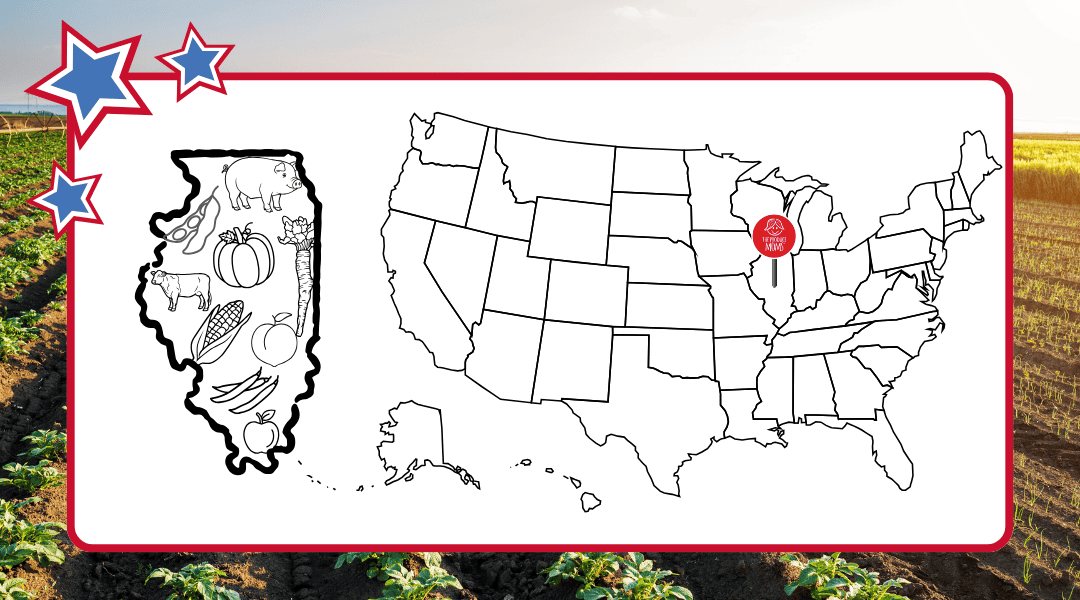
Illinois consistently ranks as the #1 soybean-producing state in the nation, harvesting around 650 million bushels every single year. Illinois soybeans aren’t just for food—their oils are used to make eco-friendly printing inks, industrial lubricants, and even durable rubber for tires! Locally, soybeans are a primary driver of farm income and support massive processing facilities across central Illinois. Nationally, they are essential for livestock feed, vegetable cooking oil, and renewable biodiesel. They’re also one of America’s largest agricultural exports to countries like China and Mexico.
Field Corn
A close second in cash receipts (and often swapping the top spot depending on market prices), Illinois ranks #2 in the U.S. for corn production, usually growing over 2 billion bushels annually. Most of the corn grown in Illinois isn’t sweet corn on the cob—it’s yellow field corn. Locally, it fuels ethanol plants and livestock feed mills. Nationally, it forms the backbone of food manufacturing (cornstarch, high-fructose corn syrup) and energy production.
Hogs (Pork)
Illinois ranks #4 in the nation for pork production, with around 5 million hogs on farms at any given time. Hog farming provides a vital economic loop for the state: pigs eat local corn and soybeans, and in turn, their manure fertilizes the fields for the next season. Nationally, Illinois processors supply bacon, pork chops, and sausages to grocery stores and restaurants nationwide.Hog production creates thousands of local jobs in meat packing, cold-chain transport, and feed manufacturing throughout rural Illinois communities.
Cattle and Calves
Beef and dairy cattle represent another cornerstone of the state’s livestock sector, generating hundreds of millions of dollars annually. Cattle farms thrive particularly in hilly regions of northern, western, and southern Illinois where row crops are harder to plant. Illinois grain-fed beef is known for its rich marbling, making it a favorite for steak houses across the nation.
Pumpkins
While wheat or hay might yield higher dollar amounts in some years, Illinois is the undisputed “Pumpkin Capital of the World,” producing roughly 90–95% of all processing pumpkins grown in the United States! The small town of Morton, Illinois, hosts the world’s largest pumpkin processing plant. Processing pumpkins aren’t the bright orange jack-o’-lanterns you carve for Halloween. They are Dickinson pumpkins, which look more like tan squashes and have sweeter, creamier flesh inside!
Fruits and Vegetables from Illinois
While Illinois is world-famous for giant fields of grain corn and soybeans, the Prairie State is also a massive powerhouse for specialty crops.
Top Fruits
- Pumpkins: While often grouped with culinary vegetables, pumpkins are botanically fruits (specifically large berries known as pepos). Illinois is the undisputed #1 pumpkin producer in the United States, harvesting more acres and weight than the next several top states combined.
- Apples: Apples are the most widely cultivated tree fruit across northern and central Illinois. Apple orchards generate millions of dollars in direct-to-consumer agritourism.
- Peaches: Illinois consistently ranks among the top 10 states in the nation for peach production. Southern and southwestern Illinois provide microclimates with milder winters ideal for stone fruit. Peach trees are cold-sensitive, making spring freeze damage the biggest risk for Illinois orchardists.
Top Vegetables
- Horseradish: Illinois leads the nation in horseradish production, growing two-thirds to 80% of the entire U.S. supply. The rich, deep, potash-laden loam soils of the American Bottoms (the Mississippi River valley area in southwestern Illinois) provide the ideal nutrients for pungent root growth. Collinsville, Illinois, is dubbed the “Horseradish Capital of the World.”
- Sweet Corn: Distinct from standard field corn used for livestock feed and ethanol, sweet corn is grown specifically for fresh eating and canning. Illinois farmers harvest roughly 10,000 acres of sweet corn annually, balancing fresh market roadside sales with commercial canned goods.
- Green Beans (Snap Beans): Illinois harvests around 9,000 acres of snap beans per year. The vast majority go directly into regional canning and processing plants. It regularly places in the top 10 states nationally for snap bean production.
Visit our Produce Directory and learn how to Select, Store and Serve these fruits & vegetables.
About 50 States of Agriculture
In celebration of 250 years of the United States, The Produce Moms is proud to present 50 States of Agriculture. This is an educational and free resource that celebrates the bounty of America. We utilized USDA and State Department of Agriculture data (Illinois) for the content in this series.
Agriculture is the foundation of freedom. Food security is national security. This content series is a celebration of United States culture and the hard-working farmers who feed, fuel & clothe our nation and the world.
Visit another state from our 50 States of Agriculture.