How To Cut Butternut Squash

Dec 05, 2025
This post may contain affiliate links. Please read our disclosure policy.
Butternut squash is a delightful and versatile vegetable. However, many people ofen over look it in the grocery store. They think that tackling its tough skin and dense interior can be intimidating. Don’t let that stop you from enjoying its sweet, nutty flavor!
This guide will walk you through everything you need to know, from understanding the squash to safely and efficiently cutting it up.
You will soon become a butternut squash expert!
What Is Butternut Squash?
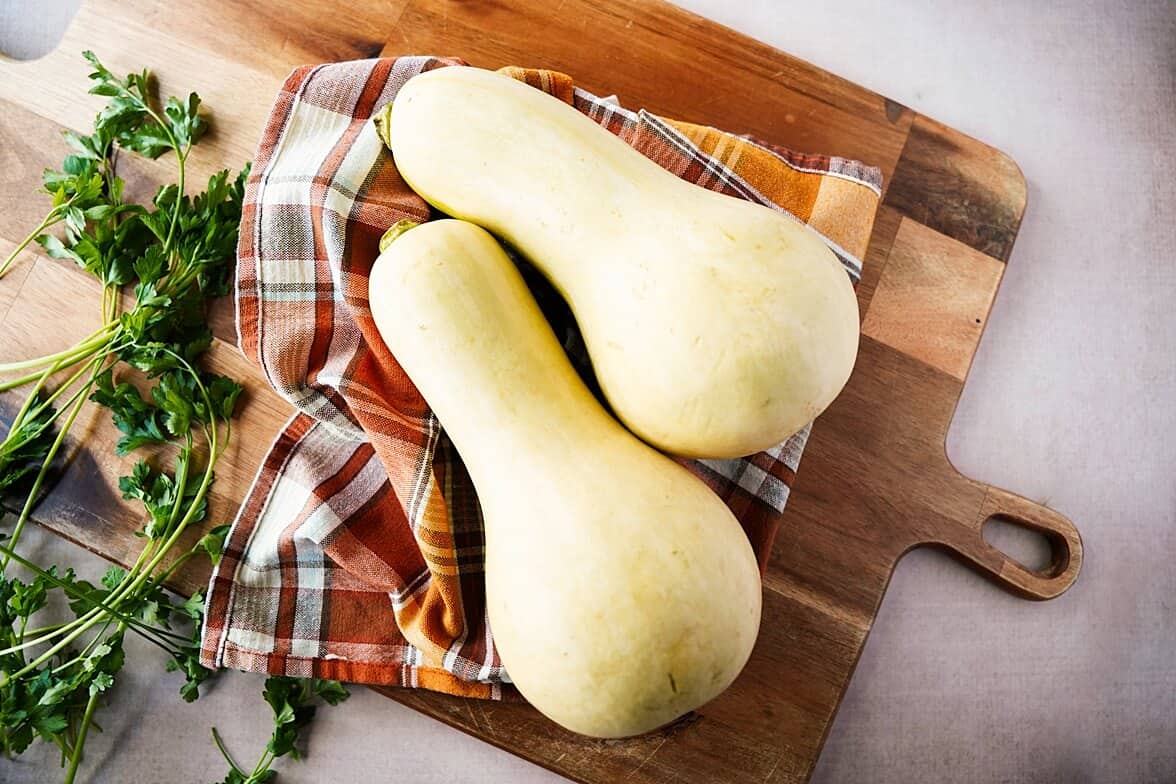
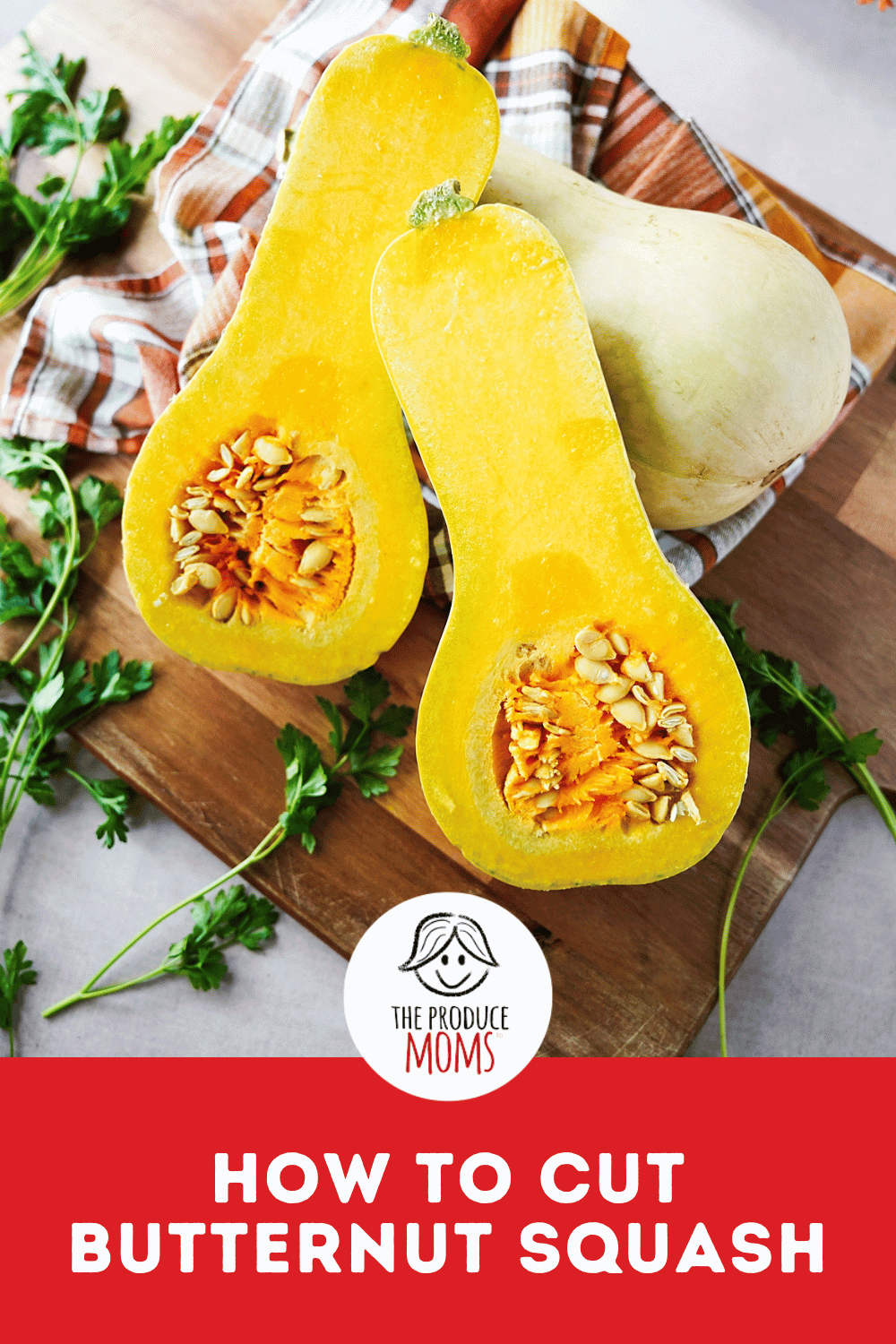
Butternut squash is classified as a type of winter squash. It is known for its distinct hourglass or bell shape and its smooth, hard, pale yellow-tan skin. The flesh is a deep, vibrant orange color which indicates a high beta-carotene content. It belongs to the Cucurbita family, along with pumpkins and zucchini.
When cooked, the flavor profile has a naturally sweet, nutty flavor often. It sometimes can be compared to the flavor of sweet potatoes, making it perfect for both savory and sweet dishes.
Butternut squash is an excellent source of vitamins, particularly Vitamin A and Vitamin C, as well as fiber and potassium.
As a winter squash, it is typically harvested in the fall, but the hard rind allows it to store well. Butternut squash is available year-round in most grocery stores.
Cutting Butternut Squash
Cutting a butternut squash can feel like a workout, but a few simple techniques and the right tools make it much easier and safer.
What Do You Need?
- A sharp, large chef’s knife: A dull knife is actually more dangerous, as it requires more force and can slip.
- A sturdy cutting board: Place a damp paper towel or a non-slip mat underneath to prevent the board from sliding.
- A vegetable peeler (optional, but recommended): A sturdy Y-peeler works best.
- A spoon or ice cream scoop: For scooping out the seeds.
Prepare the Squash
- Wash and rinse under cool running water.
- Microwave It (Optional Trick): To soften the skin slightly and make cutting easier, pierce the squash all over with a fork and microwave it for 2 to 3 minutes. Be careful when handling it afterward, as it will be hot.
Related: How To Properly Wash Fruits & Vegetables
Time to Cut
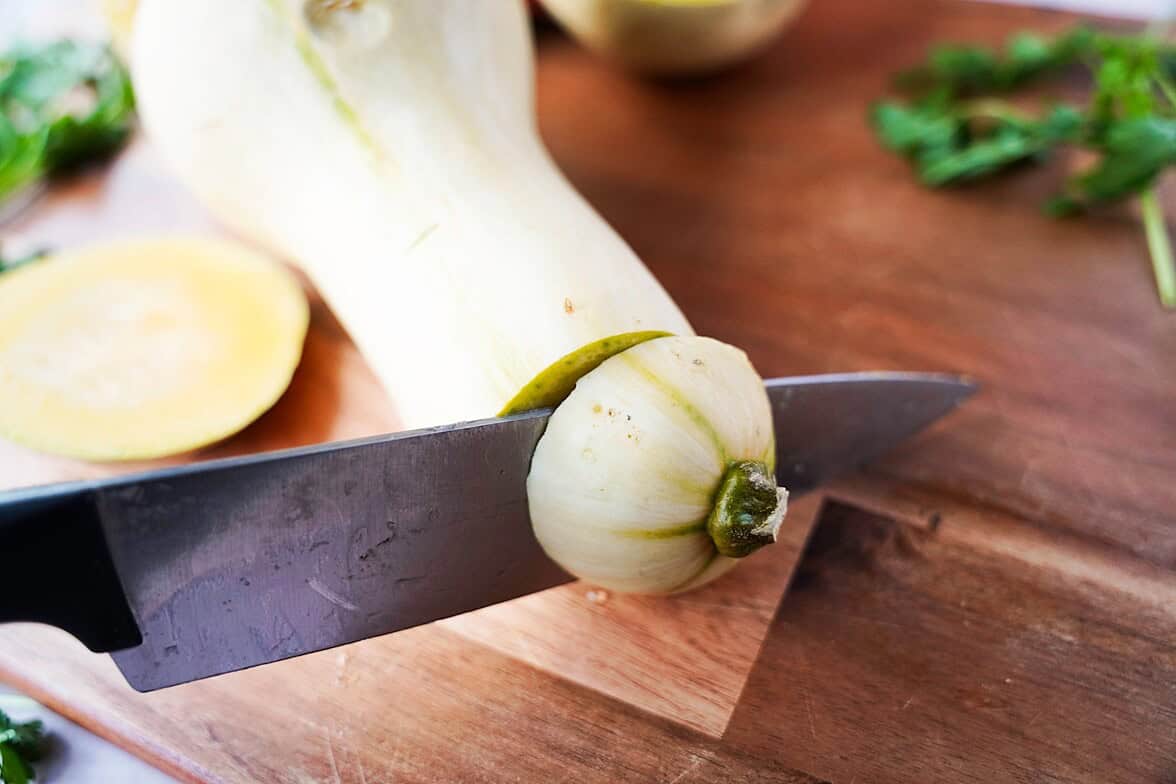
First, cut the ends. Use your sharp knife to carefully trim off the top stem and the bottom blossom end.
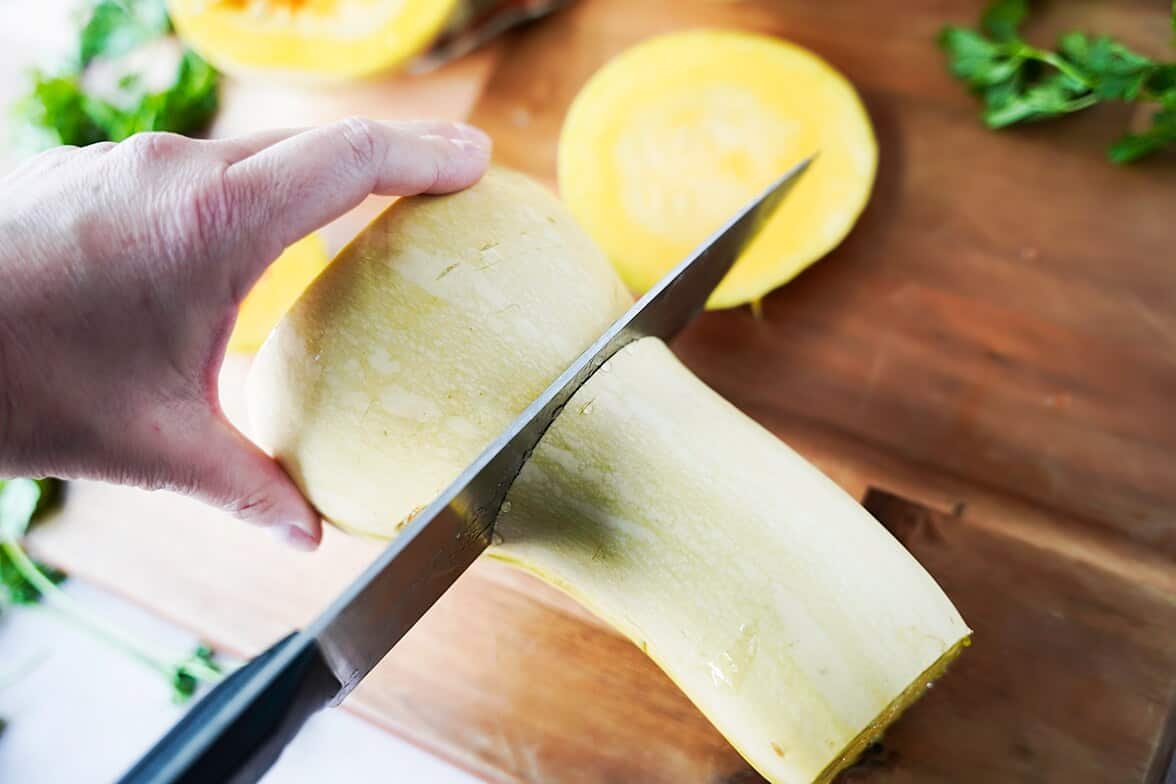
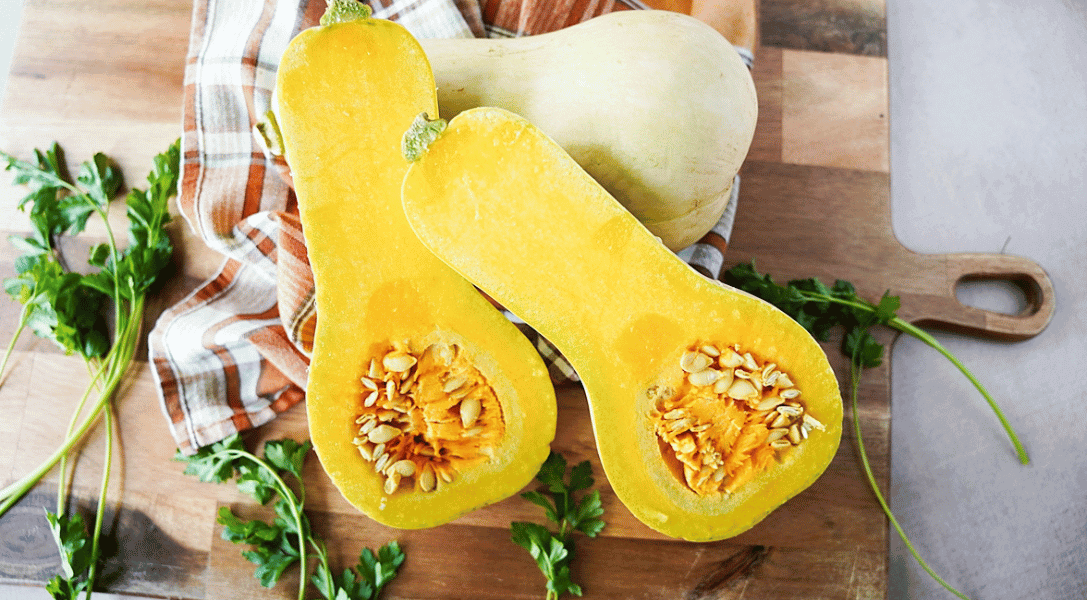
We like to cut the butternut squash into two sections by cutting where the narrow section meets the bulbous section.. The top section on the stem-end side is narrower and filled with solid flesh. The more bulbous section on the flower end is hollow and contains the seeds.
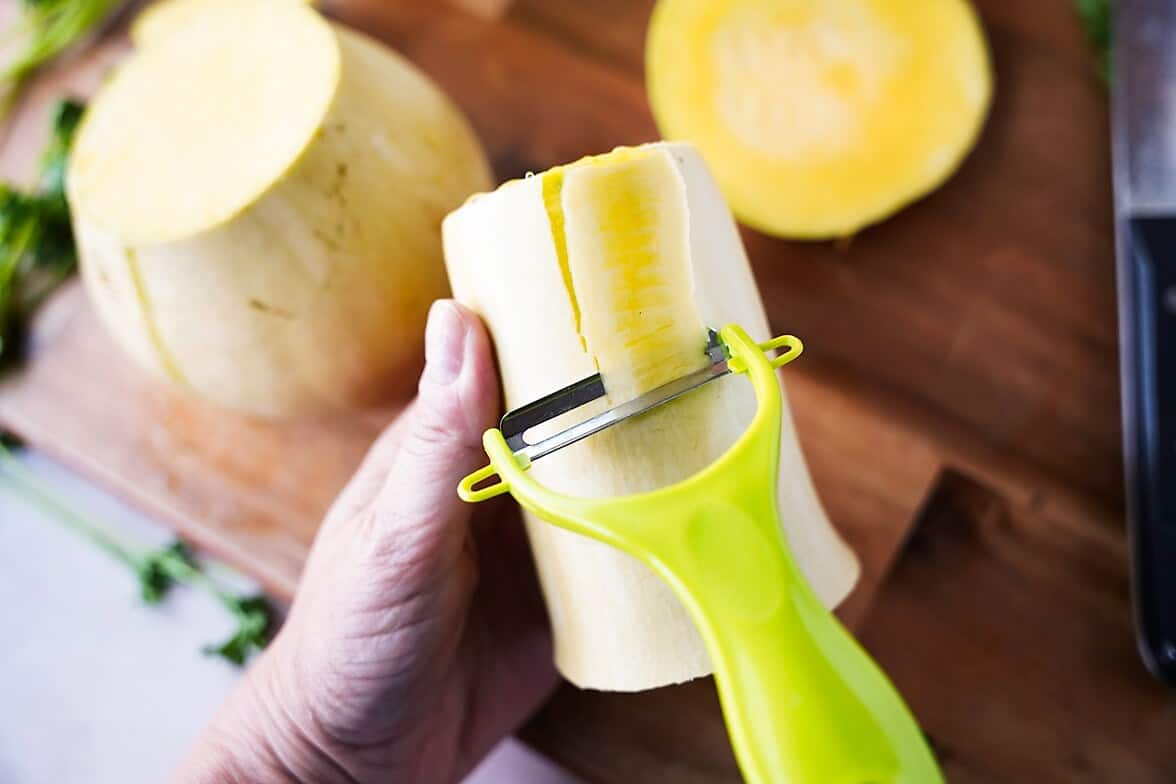
Next, peel the skin. Using your vegetable peeler, start at the top and peel downward in long strips, following the curve of the squash. Remove all of the tough, waxy outer skin. If you don’t have a vegetable peeler, you can use your knife. You will want to run it from top to bottom following the natural curve of the squash.
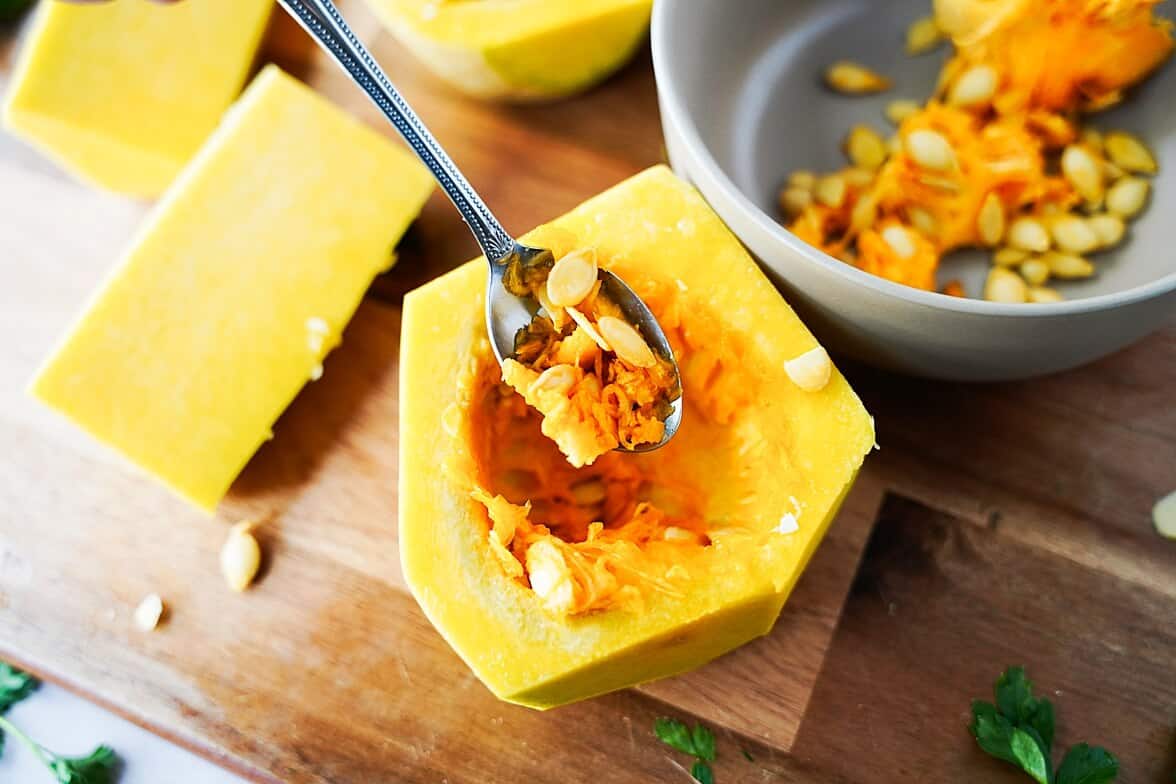
Use a spoon or an ice cream scoop to thoroughly scrape them out. You can save and roast the seeds, similar to pumpkin seeds!
Related: Roasted Pumpkin Seeds
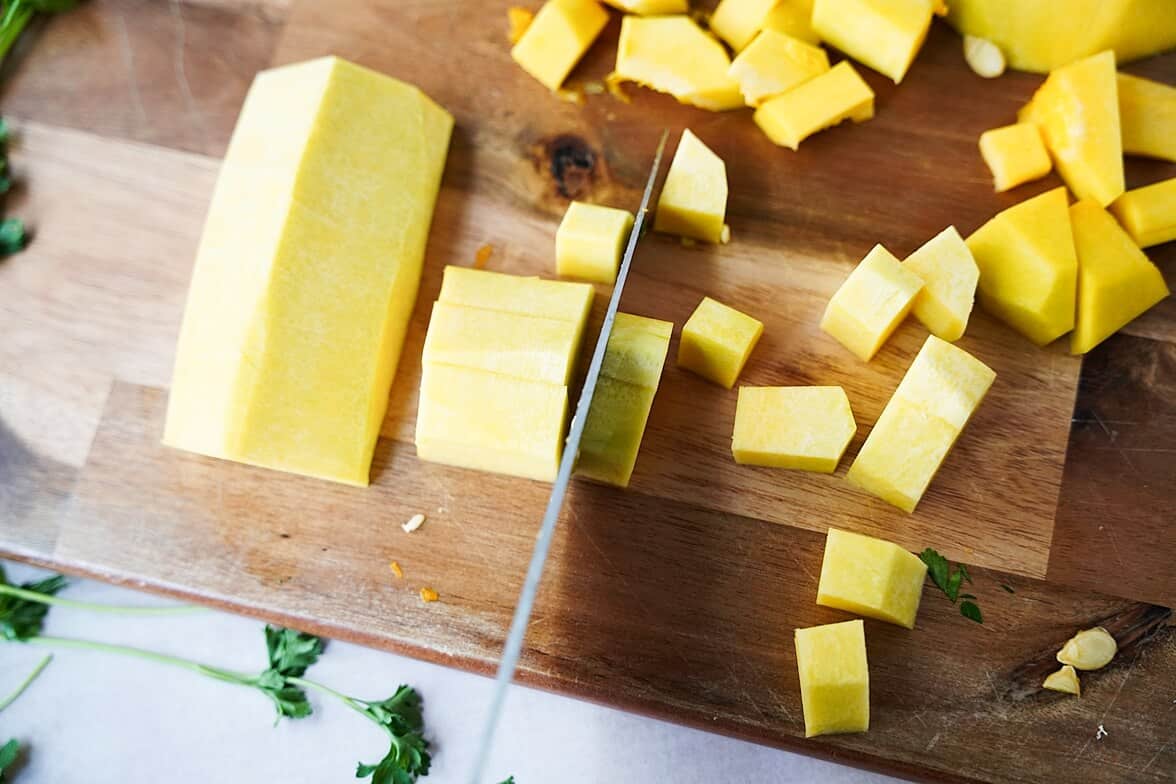
Dice the neck: Lay the two neck pieces flat-side down and slice them into half-moon planks of your desired thickness. Stack the planks and slice them into sticks, then into cubes for dicing.
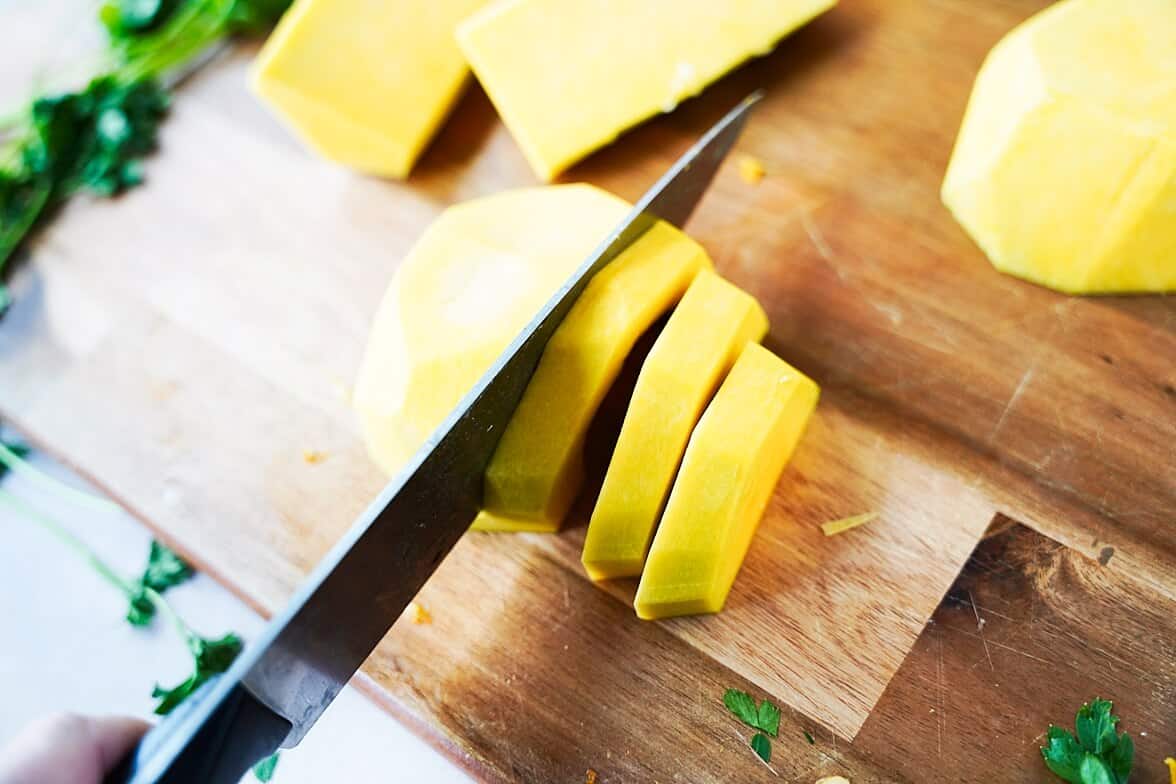
Dice the Base: Slice the scooped-out base pieces into planks and dice them the same way.
Enjoying Butternut Squash
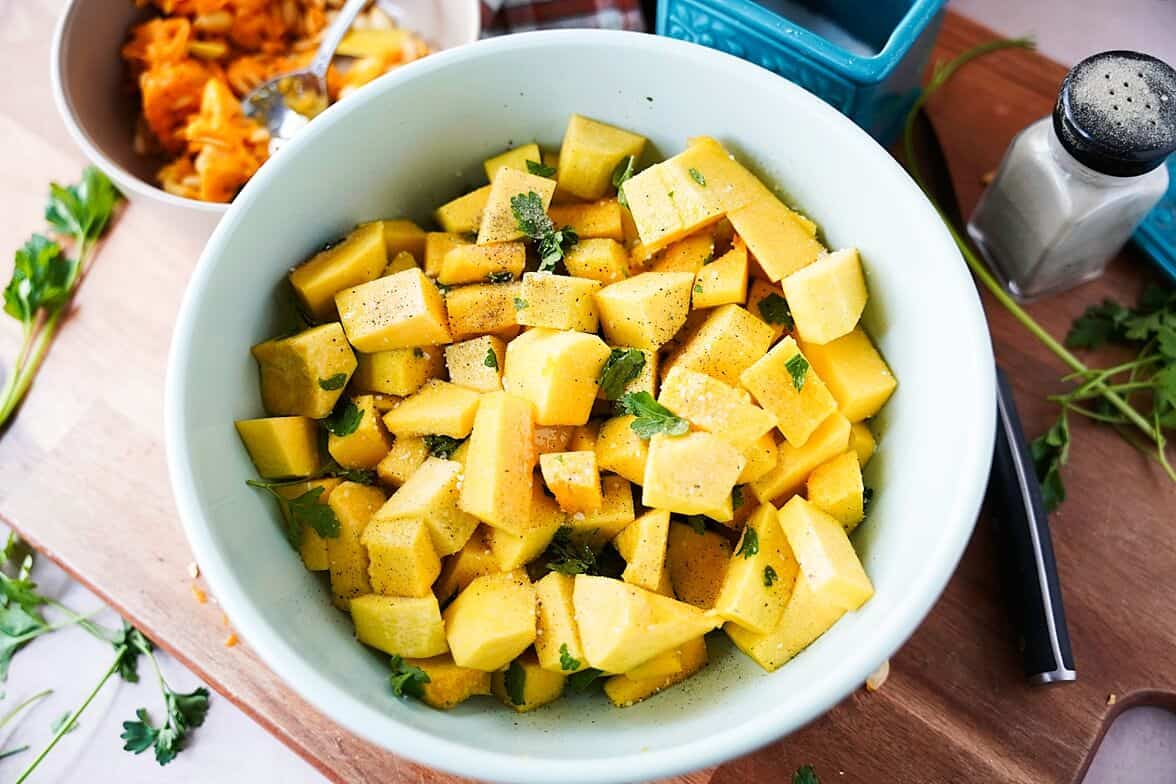
Now that you have learned to cut butternut squash, you can use it in a variety of ways.
Roasted Cubes with Herbs: Simply toss cubes with olive oil, salt, pepper, and herbs like rosemary or thyme, then roast until tender and caramelized.
Butternut Squash Risotto: Stir roasted squash puree or small diced pieces into a creamy Arborio rice risotto, perhaps with a sprinkle of sage and Parmesan cheese.
Butternut Squash Mac and Cheese: Puree the cooked squash and stir it into the cheese sauce for a velvety texture, added nutrients, and a beautiful orange hue. Get recipe.
Stuffed Butternut Squash: Halve the squash, scoop out the seeds, and stuff it with a mixture of ground sausage, wild rice, cranberries, and walnuts, then bake.
Butternut Squash and Black Bean Tacos/Burritos: Roast the squash and use it as a hearty, slightly sweet filling for vegetarian tacos or burritos, topped with chipotle cream.
Butternut Squash Muffins or Bread: Use the cooked, mashed squash (similar to how you’d use pumpkin) in sweet baked goods like muffins, loaves, or scones.
Soups, Bisques or Stews: Butternut squash lends a natural sweetness, creamy texture, and vibrant color when added to warming soups, hearty stews, and elegant bisques.
Slaws: Shredded or julienned raw butternut squash can be tossed into fresh slaws, adding a crunchy texture and subtle, sweet flavor that pairs well with tart vinaigrettes or creamy dressings.
Butternut Squash Smoothie: Add a few spoonfuls of cooked, chilled puree to your morning fruit smoothie for a thickness boost and extra nutrition.